


This is your Project Page. It's a great opportunity to help visitors understand the context and background of your latest work. Double click on the text box to start editing your content and make sure to add all the relevant details you want to share.
This is your Project Page. It's a great opportunity to help visitors understand the context and background of your latest work. Double click on the text box to start editing your content and make sure to add all the relevant details you want to share.
This is your Project Page. It's a great opportunity to help visitors understand the context and background of your latest work. Double click on the text box to start editing your content and make sure to add all the relevant details you want to share.
Francisco Gomez Paz
From Tree to System
What if a chair could tell the story of a changing landscape?
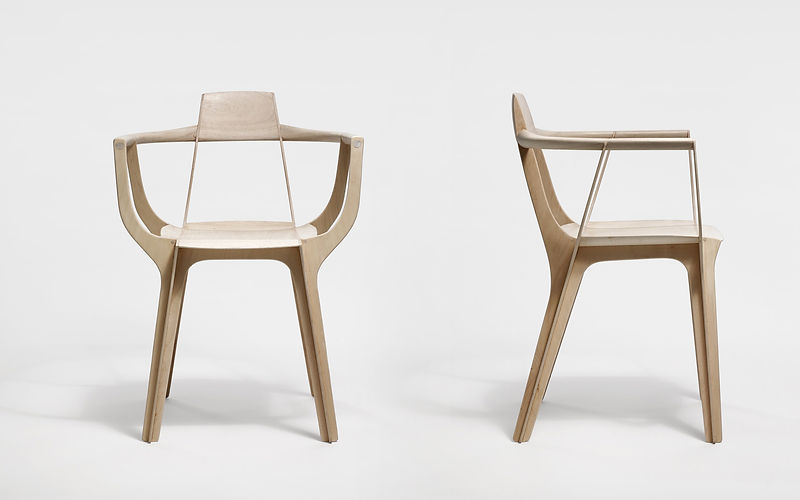
Eutopia, designed by Francisco Gomez Paz, shows how design, technology and ecology can come together in one precise gesture. Made from ultra-light Kiri (Paulownia) wood, the chair weighs only 1.8 kg and is assembled from ten interlocking elements—without screws or glue. A structure that is both minimal and intelligent, where form follows material logic.
But the story begins long before the object.
Paulownia is a regenerative tree. When cut, it regrows from the same root system, keeping the soil structure and mycelium network intact. Fast-growing and lightweight, it can reach a usable trunk within seven years. Today, this tree is increasingly cultivated in the Netherlands, forming part of a new agricultural model.
For farmers transitioning away from intensive livestock systems, crops like hemp, flax, silphium perfoliatum, miscanthus and Paulownia offer an alternative. Restoring soil health, increasing biodiversity and creating new material streams for design and construction.
Within this context, Eutopia becomes more than a chair. It represents a shift—from extraction to regeneration, from static production to living systems. A design that is not only efficient in its making, but embedded in a broader ecological cycle.
At ROOTS, it reflects a future where materials are grown, not mined. And where design begins in the field…

